

Make a plan for the actual work
Begin by defining furniture disassembly and reassembly in terms another person can act on. Write down the addresses or locations involved, the dates you know, and the parts of the work you want help with. The starting information should include beds, tables, shelves, modular furniture, hardware, and manufacturer instructions. If one of those details is still uncertain, mark it as a question to resolve rather than presenting it as settled.
Choose a person to maintain the working plan. In a household, this can be whoever is already coordinating appointments; in a shared move, agree on the contact before requesting service. That person should keep the inventory, preparation decisions, and provider messages together. Other people can handle individual tasks, but a shared record makes it easier to spot a missing responsibility.
Work backward from preparation before loading and agreed setup after delivery. Decide what must be ready before that point and which arrangements depend on somebody else’s answer. Put those decisions first. Buying supplies or booking helpers before the plan is clear can leave you with the wrong equipment or an appointment that does not fit the receiving location.
Identify furniture needing preparation
List pieces that must be reduced for handling or transport. Show the mover tight doorways and turns so the discussion is based on the actual carrying route.
Start with information you can check. For furniture disassembly and reassembly, the working list should cover beds, tables, shelves, modular furniture, hardware, and manufacturer instructions. A photograph, measurement, or written instruction can explain something a broad description leaves uncertain. Mark anything you still need to confirm and ask the responsible person directly. Keeping an unknown visible is more useful than filling the gap with an assumption.
Use one version of the information when talking to helpers and providers. Add a date when you revise it, and keep the earlier version with your records. This prevents two people from preparing different work. If the change affects the booked service, ask whether the provider needs to revise its written plan before proceeding.
Confirm who disassembles each piece
Ask whether the moving service includes the work and suitable tools. Arrange separate specialist help for items the provider has not agreed to dismantle.
Keep this task separate from the decisions that follow it. Decide what you can complete yourself, what another person has agreed to do, and what still needs arranging. Those boundaries matter when a provider arrives expecting preparation to be finished. Do not leave an unresolved job on a list that everyone assumes belongs to somebody else.
Choose a practical way to confirm completion. It might be an updated inventory, a saved message, or a check of the relevant room. The point is to leave a record the next person can use. For furniture disassembly and reassembly, share the result with the person coordinating preparation before loading and agreed setup after delivery so the task fits the rest of the plan.
Use the item’s instructions
Keep assembly guidance when available and follow relevant manufacturer information. Avoid assuming that two similar-looking furniture pieces come apart in the same way.
Ask specific questions before you accept a proposal. Find out what work is included, what information the provider used, and which conditions would require a revised arrangement. When a response changes your understanding of the service, ask for the document to reflect it. A useful written answer connects the promise to your belongings and property conditions.
Compare alternatives using the same details. One offer may assume preparation that another includes, or one appointment may cover a different part of the job. Write those differences beside the price instead of treating the totals as interchangeable. Choose the arrangement whose responsibilities you understand and whose schedule fits the work that must happen.
Label hardware immediately
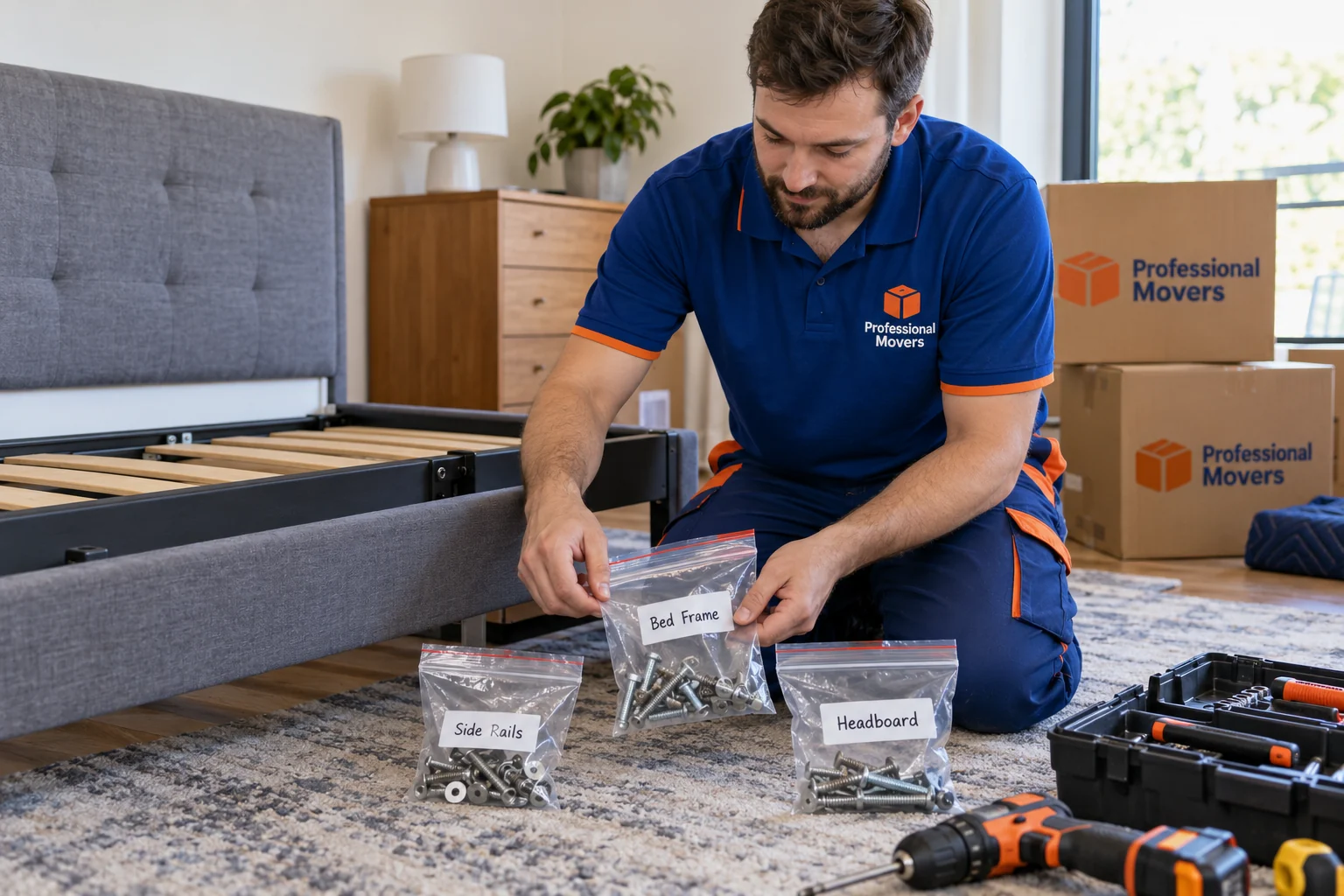
Put screws, bolts, and fittings in secure labeled bags or containers. Connect the label to the furniture item and record where the hardware will travel.
Put the arrangement on the calendar with the people and information it needs. A time by itself does not confirm that the property is accessible, the equipment is ready, or someone can receive the crew. Check the related appointment before relying on it. Keep the contact for access or scheduling questions somewhere you can reach without opening packed belongings.
If the timing changes, notify the people whose work depends on it. Explain the revised date or window and ask them to confirm their availability. Avoid assuming that a change accepted by one provider automatically updates another booking. Save the confirmation with the current plan for furniture disassembly and reassembly so the arrival instructions remain consistent.
Protect removed components
Wrap loose shelves, legs, panels, and exposed surfaces suitably. Identify delicate pieces so they are not treated as ordinary loose wood or metal.
Prepare the physical work area before the appointment. Keep walking routes, doorways, and exits clear, and identify anything that should remain untouched. Explain unusual handling needs early. If a task requires specialist equipment or technical knowledge, ask suitable people to assess it rather than creating an improvised method when the crew arrives.
Review the agreed preparation against the actual contents. Packing can reveal belongings absent from the first inventory, and access can change after the booking. Report those differences while there is time to adjust the plan. For furniture disassembly and reassembly, a completed preparation check should leave the next person able to see the work, the route, and the items that need a separate decision.
Record how parts fit
Take useful photographs before or during approved disassembly. Keep the record accessible at the receiving home rather than packed inside an unidentified carton.
Think about the period when the shipment or work area is unavailable. Keep what you need for travel and daily use in a clearly identified separate place. Tell helpers and the provider where that place is. Private documents and personal essentials should have a deliberate handling plan rather than being left among cartons waiting to be collected.
Check the receiving arrangement as carefully as the departure arrangement. Decide who will be available, which records they need, and how they can reach the decision maker. Give them clear instructions for the agreed work. This is especially useful when different people manage preparation and arrival, or when your own travel makes immediate questions harder to answer.
Agree on delivery assembly
Specify which items the crew reassembles and what preparation you must provide. Choose their final room location before assembly makes them harder to reposition.
Keep this information close to the documents it explains. Save the accepted estimate, agreed changes, useful photographs, and relevant contacts in an accessible folder. You can use paper, digital copies, or both, provided the record does not travel only inside the shipment. A second accessible copy helps when a phone is unavailable or you need another person to receive the load.
Describe changes precisely. Record the item or task, the date, the person you contacted, and the answer received. Avoid notes such as “all sorted” when another person needs to know what was actually approved. For furniture disassembly and reassembly, connect the note to the current inventory or appointment so it can be understood later without reconstructing the whole conversation.
Check the completed furniture
Review stability and missing parts through the appropriate responsible person. If something is uncertain, keep the item out of use until suitable help checks it.
Allow time to check the result before moving on to ordinary unpacking or the next appointment. Look for missing components, work left unfinished, and questions that need the provider’s attention. Keep the relevant documents and packaging until you know whether they are useful. Raise concerns through the responsible business’s stated process and save your record of the contact.
Separate the practical follow-up from the rest of the household tasks. Assign someone to find an item, arrange a specialist check, or ask the provider for an answer, then record the result. That keeps unresolved moving questions from being lost among everyday chores. Close the task only when the agreed work or the next required action is clear.
Compare the service as well as the price
When you request professional help for furniture disassembly and reassembly, give each provider the same information. Ask for the proposed work and assumptions in writing. A price is easier to evaluate when you know which tasks, materials, dates, and access conditions it covers. Keep any excluded work visible so you can arrange it separately or ask for another option.
Read the proposal beside your task list. Check who is responsible for preparation, handling, transport where relevant, and the final receiving work. Ask about phrases that could describe several different services. If a provider says something is included during a conversation, request that the written proposal identify it clearly enough to compare with the other offers.
Keep your own expenses separate from the provider’s quoted service. Travel, accommodation, supplies you purchase, and arrangements made with another business belong in your household budget even when they are absent from the moving estimate. Confirm payment and cancellation terms with the responsible provider before committing to a booking. Do not assign a cost to uncertain extra work without asking how it would be priced.
Update the plan when something changes
Changes are easier to handle when the original plan is still available. If your inventory, date, access, or service needs change, describe the difference to the provider and ask what must be revised. Keep the update with the accepted proposal rather than replacing every earlier record. You should be able to see what changed and which version everyone is now using.
For example, suppose preparation before loading and agreed setup after delivery changes after you have arranged related help. First confirm the new requirement with the person responsible for it. Then contact the provider and any separate helpers, explain the change, and request updated availability and instructions. Do not assume an accepted change to one appointment settles the other appointments automatically.
Decide which alternative you can realistically use if the first arrangement is unavailable. That might mean another date, a separate service, a different receiving person, or a temporary arrangement you have checked. Evaluate the responsibilities and costs of that alternative before choosing it. A backup should answer a real uncertainty in your plan rather than add a booking you do not need.
Questions to settle before booking
Who is responsible for each stage? Ask for the name and contact of the business providing the agreed work and any separate provider involved. Find out who can authorize a change, who sends appointment updates, and who answers questions after completion. Save those contacts with the written service record rather than only in a message thread.
What do you need to prepare? Review beds, tables, shelves, modular furniture, hardware, and manufacturer instructions with the responsible provider and identify tasks you must finish before the appointment. Ask about any item or condition the service does not cover. If a specialist or technical service is needed, arrange it through suitable help and confirm its timing separately.
What happens if the plan changes? Ask how the provider handles a revised inventory, a different date, unavailable access, or a receiving delay. Review the stated payment and cancellation process while you still have time to compare alternatives. Keep useful answers in writing and ask for an updated proposal when the agreed work changes.
Keep a record you can use during the move
Create a compact moving folder before the work begins. Include the current inventory, accepted service proposal, appointment confirmations, provider contacts, and important changes. Add clear photographs or measurements when they explain a handling concern. Keep a copy accessible to anyone you have asked to receive a shipment or supervise part of the job.
Use the record at handover and again when the work finishes. Compare what happened with the agreed scope and note anything still unresolved. If you need to contact a provider, give the item or task reference, the date, and the question you want answered. A specific record lets the other person respond to the issue without guessing what you mean.
After completion, keep the documents needed for receipts, provider follow-up, and any applicable question or claims process. Avoid discarding useful packing or condition records while a concern remains open. Ordinary tidying can continue around that record, but the person responsible for follow-up should know what is still needed and where it is stored.